Search
 Member





Part 1 of 2 · Musang King D197 · Mao Shan Wang · Malaysian premium durian
Every year, millions of people across Southeast Asia, China, and beyond ask the same question: Which durian should I eat?
The answer has not changed in three decades.
Musang King. D197. The one they call Mao Shan Wang.
Malaysia's durian exports to China alone reached RM1.19 billion in 2023, driven almost entirely by demand for one variety. Not because of clever marketing — because of something far more primal: the moment you taste it, you understand.
The D197 Legacy: Why Musang King Reigns Supreme
Officially registered as a commercial cultivar in 1993 by the Malaysian Ministry of Agriculture, Musang King carries the code D197 — a designation that's become shorthand for premium quality across the global durian trade.
Its name traces back to Gua Musang in Kelantan, where civet cats (musang) once roamed the orchards freely. It's also known as Rajah Kunyit (Turmeric King) for its deep golden flesh, and Mao Shan Wang (猫山王) in China.
The global tipping point came in 2010, when Macau casino magnate Stanley Ho purchased 88 Musang King durians as a prestige gift. The story spread across China. Demand exploded. What was once a beloved Malaysian staple became an international luxury fruit — and it's never looked back.
Connoisseurs universally agree: Pahang's hilly terrain and mineral-rich soil — particularly Bentong and Raub — produce the most complex, flavour-forward Musang King in the world.
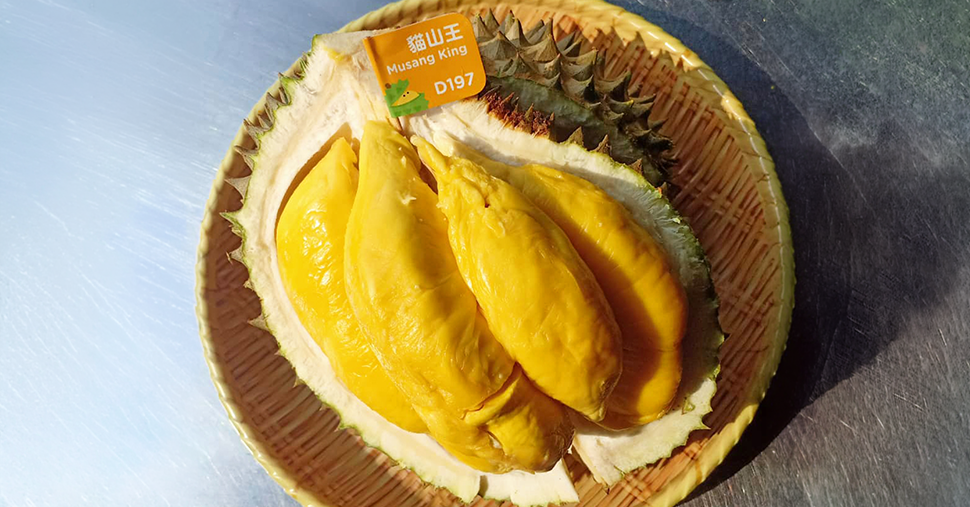
The Anatomy of Flavour: What Musang King Actually Tastes Like
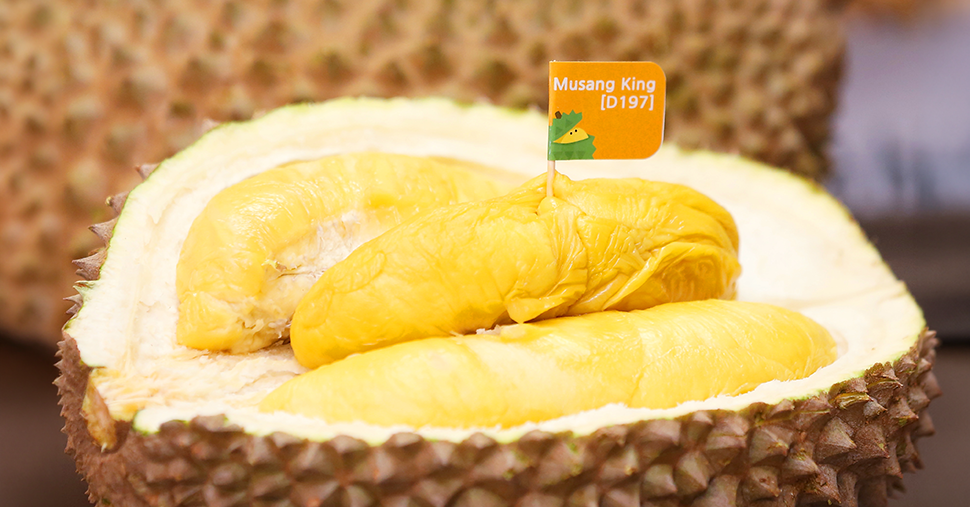
- Colour: Deep turmeric gold — almost luminescent. The flesh looks like liquid sunshine set into custard.
- Texture: Thick. Creamy. Dense but yielding. Like crème brûlée that hasn't been torched yet — smooth, heavy, and satisfying in a way that feels decadent.
- Taste: The flavour is genuinely bittersweet — not sweet-then-bitter, but both simultaneously. A rush of caramelised sweetness hits first, layered with a dark chocolate-like bitterness on the finish. Nutty. Slightly earthy. Deeply complex.
"The first bite is always the moment. You expect sweetness. Then that bittersweet wave arrives and you realise — this is why people obsess over this fruit."
What makes every Musang King slightly different? Tree age and soil. Older trees (30–70 years) produce smaller yields with more concentrated flavour. Fruits grown in iron-rich, well-drained highland soil develop that signature bitterness that cheaper, lowland-grown Musang King simply can't replicate.
Frequently Asked Questions
What does D197 mean?
D197 is the official cultivar registration number assigned by Malaysia's Department of Agriculture. It means Musang King was the 197th durian variety registered in the national registry. The code is now used internationally as shorthand for the variety.
Visit DurianBB
Want to experience authentic Malaysian Musang King with confidence? Visit DurianBB World, and DurianBB Park, explore the DurianBB Academy, or browse DurianBB premium durian products to taste, learn and compare trusted durian varieties.
Related Musang King Guides:
your durian journey by exploring our related masterclasses on Musang King (D197), Golden Phoenix, Red Prawn, flavor profile comparisons, and the history behind Malaysia's most celebrated local durian varieties.
Reviewed by the DurianBB Team
This guide is prepared and reviewed by DurianBB based on our durian sourcing, tasting, customer education and Malaysian durian experience. DurianBB works closely with durian farms, retail teams and customer-facing tasting experiences to help buyers understand authentic Musang King quality