Search
 Member





How to Identify Authentic Musang King: The 4 Visual Markers
Your 30-second stall check before you pay
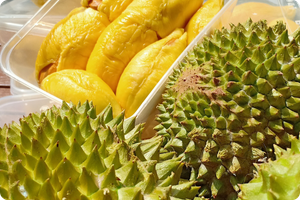
You're at a durian stall. The seller is holding up a fruit and quoting RM65 per kg. He says it's Musang King. Maybe it is. Maybe it isn't.
You have about 30 seconds to decide. Here are the four things to check — in order of speed and reliability.
The 4 Visual Markers of Authentic D197
1. The Starfish at the Base — Your #1 Check
Flip the fruit over. Look at the very bottom, where all the husk sections meet.
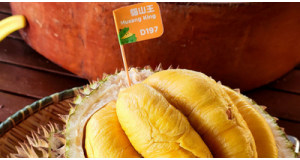
An authentic Musang King Durian (D197) shows a distinct five-pointed brown seam — often described as a starfish or star pattern. The seams radiate clearly outward from the centre. This is your single most reliable authenticity marker.
No visible star? Don't buy it. A faint or invisible pattern at the base is the most common sign you're holding a D24 or another variety passed off as Musang King.
Pro tip: Some authentic Musang King fruits show a 6-pointed variation — this is normal. What matters is that the seam pattern is clearly visible, not faint or invisible.
2. The Pyramidal Thorns — Your Fastest Visual Check
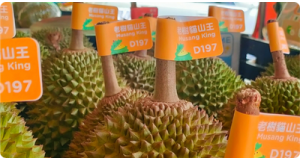
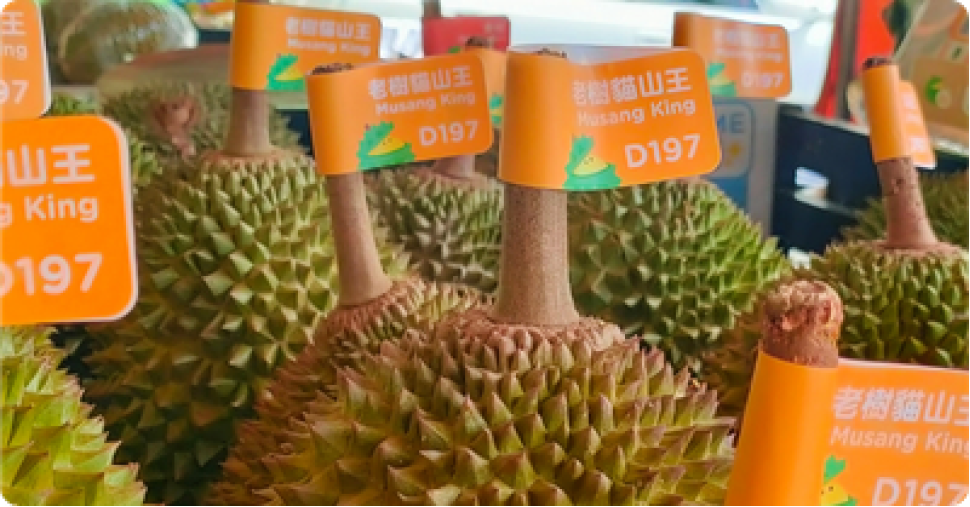
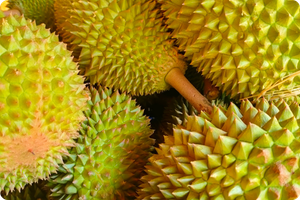
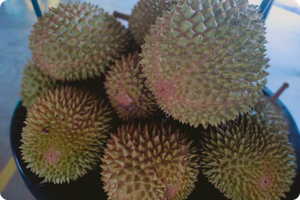
Run your palm carefully across the husk. Musang King thorns are:
- Broad at the base — wide, pyramidal, almost triangular in cross-section
- Blunt-tipped — noticeably less sharp than other varieties
- Widely spaced — with visible gaps between each spike
The difference becomes obvious when you compare it directly with D24 — the variety most commonly mislabelled as Musang King:
| Feature | Musang King (D197) | D24 (Sultan) |
|---|---|---|
| Thorn shape | Broad, pyramidal, flat-sided | Dense, sharp, needle-like |
| Thorn spacing | Widely spaced — easy to grip | Closely packed — pricklier |
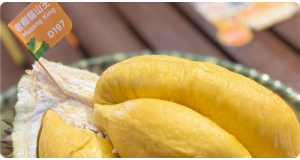
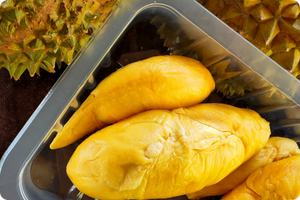
| Flesh colour | Deep turmeric gold | Pale cream to light yellow |
| Flavour | Bold bittersweet, complex | Milder, uniformly sweet |
| Price (MY) | RM40-RM80/kg | RM30-RM50/kg |
3. The Stem Test — Variety + Freshness in One Check
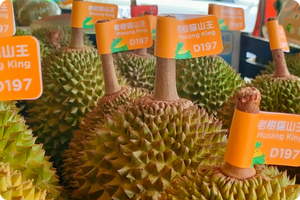
A genuine Musang King Durian (D197) stem is short, thick, and slightly cork-like — not long and thin (which usually means a different cultivar).
For freshness: scratch the outer bark of the stem lightly. You want a pale green to cream-coloured layer underneath. Dried brown fibre means the fruit has been sitting too long or was stored poorly.
Also look for a subtle raised ring circling the stem base — a consistent D197 trait that signals structural integrity of the husk.
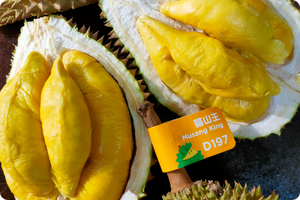
4. The Bean Shape — Best Value Indicator
Prioritise durian with an oval or elongated 'bean' shape over perfectly round specimens. Experienced buyers consistently find the bean silhouette correlates with thicker flesh, smaller seeds, and a better flesh-to-seed ratio.
Perfectly round durians are almost always a different cultivar.
Quick Identification Summary
Before you pay — check these 4 things:
- ⭐ The Starfish: Clear 5-pointed star pattern visible at the base