


12 Malaysian Foods to Try: What to Order & Where
Malaysia food guide · Updated 4 November 2026
Coconut rice for breakfast, noodles for lunch, satay to share and something cold after a hot afternoon: eating in Malaysia is part of the trip, not just a gap between sights. Start with a few dishes you like the sound of, then choose places near the rest of your plans.


This guide compares 12 Malaysian foods and gives specific places to try them in Kuala Lumpur. It is a starting point for a first visit, not a ranking of every region’s cooking. Penang, Melaka, Sarawak and other parts of the country have their own versions and specialities.
The restaurant suggestions use current official menus and location information, not firsthand tasting reviews. Food photos illustrate the dishes; they are not photographs of the recommended restaurants’ servings. Images are displayed smaller without new edits.
What are you hungry for?
| You want | Start with | Before ordering |
|---|---|---|
| A rice meal | Nasi lemak, chicken rice, nasi kandar | Choose the protein, sides and portion |
| Noodles | Char kway teow or laksa | Choose fried noodles or a soup |
| Something to share | Satay, roti or kuih | Check the portion before adding more |
| A substantial main | Rendang or bak kut teh | Check beef, pork and broth ingredients |
| Dessert or fruit | Cendol or durian | Ask about toppings, quantity and pricing unit |
1. Nasi lemak: start with the coconut rice


Nasi lemak is a useful first Malaysian meal because there is plenty to compare on one plate: fragrant coconut rice, sambal, egg and crunchy accompaniments. The rice is the gentle part; the chilli paste brings the heat. Added chicken or beef can turn a smaller serving into a filling lunch.
Where to try it: Madam Kwan’s at Pavilion KL lists nasi lemak with chicken or beef options. Choose this if your group wants a seated meal and different dishes from the same menu. Ask for sambal separately if you want to control how much you mix into the rice.
Official menu / food information · Branch details · Open map →
2. Roti canai: crisp edges, soft layers


This pan-cooked flatbread is for tearing with your fingers and dipping. Look for crisp edges and soft layers, then try a little of each sauce before pouring anything over the bread. Plain roti and an egg-filled version make different-sized meals.
Where to try it: Pelita at 113 Jalan Ampang. Its menu calls the plain option Roti Canai Kosong. Choose it for a casual mamak-style stop near the KLCC area. Check what sauces come with the order. For an early start, confirm roti service with the branch rather than assuming the whole menu is available all day. Our KL breakfast guide compares more morning choices.
Official menu / food information · Branch details · Open map →
3. Char kway teow: a plate of wok-fried noodles
Choose char kway teow when you want fried noodles rather than soup. The broad rice noodles carry the seasoning, while egg, seafood, meat and other additions vary by kitchen. Do not treat the name as a fixed ingredient list.
Where to try it: Madam Kwan’s at Pavilion KL lists Char Kway Teow. It is a practical choice if one person wants noodles while another prefers rice. Check the toppings before ordering, especially if you avoid seafood; removing visible prawns does not establish that the sauces or cooking equipment are suitable.
Official menu / food information · Branch details · Open map →
4. Laksa: choose the broth before ordering
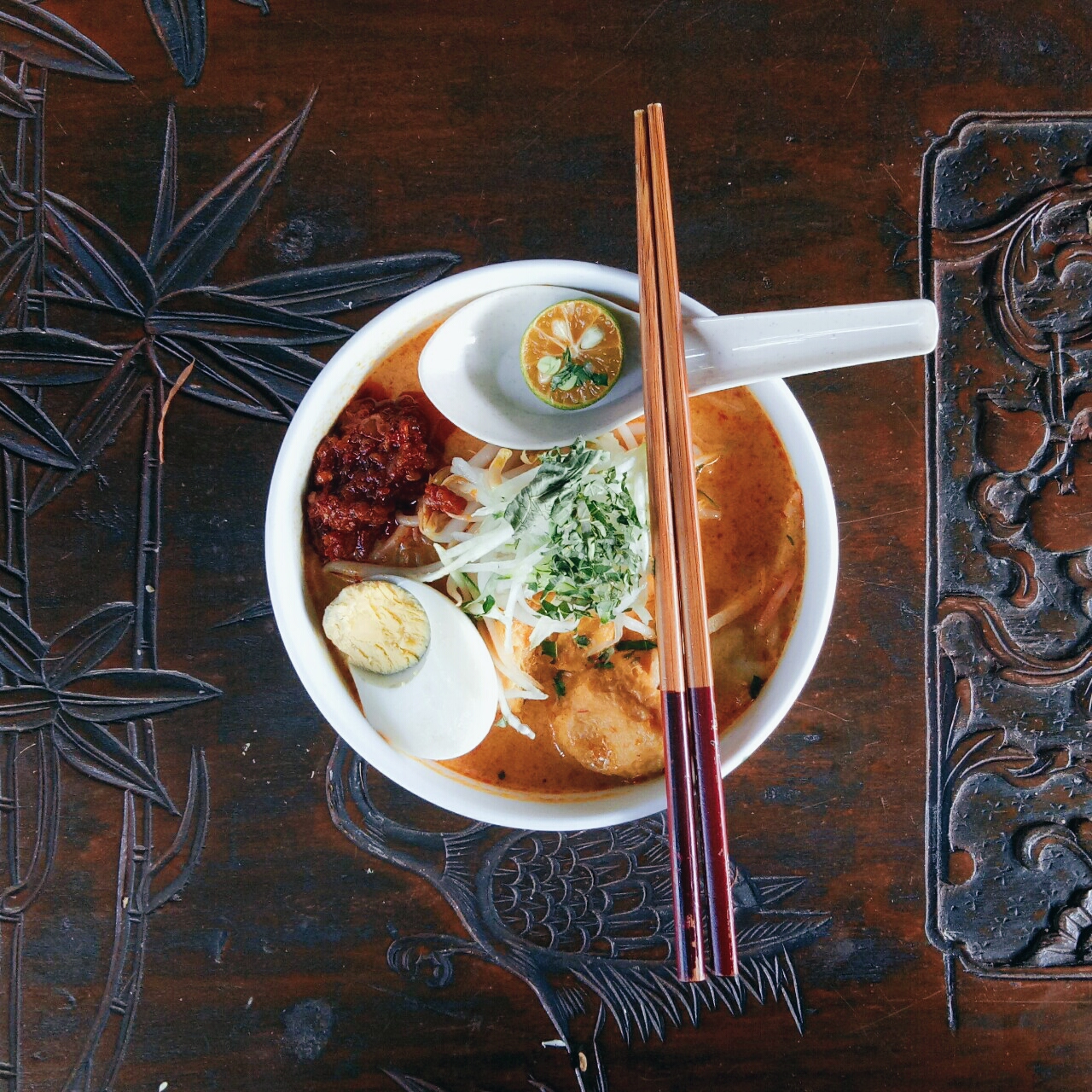

“Laksa” does not describe just one bowl. Coconut-rich curry styles and tangy, fish-based asam laksa offer very different meals; Sarawak and Johor have further regional versions. Decide whether you want a creamy or sour broth rather than ordering by the shortest familiar name.
Where to try it: Madam Kwan’s menu lists both Curry Laksa and Asam Laksa. That makes it a useful place for comparing the two styles across your group. Ask about fish or shellfish in the broth as well as the toppings. The photo shows Nyonya laksa, not that restaurant’s bowl.
Official menu / food information · Branch details · Open map →
5. Hainanese chicken rice: a straightforward lunch


Chicken, seasoned rice and sauces make a meal that is easy to recognise before you order. Steamed and roasted chicken have different textures; compare the choices on display or on the menu. A simple-looking plate still needs an ingredient check if you have dietary restrictions.
Where to try it: The Chicken Rice Shop at Berjaya Times Square, Lot 03-98A on the third floor. The operator describes steamed and roasted chicken among its signature choices. Pick this stop for a chicken-and-rice meal during an Imbi shopping day; check which options are available at the counter.
Official menu / food information · Branch details · Open map →
6. Satay: skewers to share


Satay is a good shared starter when nobody wants another full plate. Grilled meat skewers usually come with a dipping sauce; check the meat and the minimum portion before adding them to a larger meal. Peanut sauce is common, so this is not an order to make by appearance alone if you have an allergy.
Where to try it: Madam Kwan’s lists Malaysian Satay. Choose it as a shared dish alongside rice or noodles rather than planning a separate cross-city journey just for a snack. Check the current skewer count and price when ordering.
Official menu / food information · Branch details · Open map →
7. Beef rendang: choose it for a richer meal


Rendang brings meat, coconut and spices together in a thick coating rather than a large bowl of thin gravy. It is a substantial choice with rice, so order it in place of another main dish if you are eating alone. Richness and chilli heat vary; colour is not a reliable spice scale.
Where to try it: choose the beef-rendang option on Madam Kwan’s nasi lemak menu. This keeps the order to one complete plate instead of adding a separate main. If you do not eat beef, choose another dish; do not assume a chicken version is available simply because the restaurant serves chicken elsewhere on its menu.
Official menu / food information · Branch details · Open map →
8. Nasi kandar: build your own rice plate


Start with rice and choose the curries, vegetables and meat or fish you want alongside it. Nasi kandar suits a traveller who would rather point to visible dishes than decipher a long menu. The total depends on what goes onto the plate, so ask before the serving grows.
Where to try it: Pelita on Jalan Ampang lists nasi kandar sets as well as roti. Choose a listed set for a clearer starting order, or ask about the cost of your chosen accompaniments. You can share a table with someone ordering bread without both committing to the same meal.
Official menu / food information · Branch details · Open map →
9. Bak kut teh: pork in an aromatic broth


Bak kut teh is a pork-based soup, with recipes ranging from darker herbal broths to other styles. It is a different lunch from coconut rice or fried noodles. If you do not eat pork, skip this dish; the word “tea” in its name does not make it a vegetarian meal.
Where to try it: Sun Fong Bak Kut Teh on Jalan Medan Imbi. Choose it for a pork-soup meal near the Imbi/Bukit Bintang area. Its official pages disagree on the unit number and morning opening time, so use the operator’s location page and confirm an early visit by phone: 03-2148 0905.
Official menu / food information · Branch details · Open map →
10. Cendol: leave room for something cold


Cendol combines ice, green jelly and a sweet coconut-and-palm-sugar flavour, often with red beans. It is a dessert to spoon through slowly after a hot walk. Toppings and dairy additions vary, so coconut milk alone does not establish that the bowl is dairy-free.
Where to try it: Oriental Kopi at Pavilion KL, Level 1, Lot 1.30.00. Its signature menu lists Cendol. Choose it for a seated cold-dessert break during a Bukit Bintang outing, rather than returning to another district just for sweets. Ask about the current toppings and portion before ordering for everyone.
Official menu / food information · Branch details · Open map →
11. Nyonya kuih: choose a couple of small sweets


Kuih covers many small cakes and snacks rather than one particular recipe. Some are layered, some use sticky rice, and others have coconut or palm-sugar fillings. Choose by the label and texture as well as colour. Two small pieces to share can be enough to discover what you like.
Where to try it: Nyonya Colors at Pavilion KL, Level 1, Lot 1.09.00. The operator specialises in Nyonya kuih. Choose from the counter’s actual selection rather than arriving for one item you saw in an old photo. Our Malaysian sweets guide explains specific types in more detail.
Official menu / food information · Branch details · Open map →
12. Durian: give the fruit its own tasting stop

Durian has a rich texture and a strong aroma, with flavour varying by fruit, variety and ripeness. Start with a small portion or tasting platter if you are curious. Ask what is available and whether the price is per kilogram, box or platter before the fruit is opened.
Where to try it: our DurianBB World at 50 Jalan Sultan fits a Chinatown outing and offers fruit and dessert choices. Check the day’s platter and price. For a learning-and-tasting visit, choose DurianBB Academy in Seri Kembangan, Selangor, outside central KL. These are our venues; the restaurants elsewhere in this guide are independent businesses.
The Academy’s discovery garden, activities and master class make it a planned outing, rather than another city food stall. Choose a date and session, then compare the tasting and activities included with your ticket. Arrange meals and transport separately.
Check dates & book tickets todayFor more city options, see where to eat durian in KL. Our Malaysian fruit guide helps you recognise other fruit at the stall.
Choose the area before crossing the city
On a Bukit Bintang / Imbi day
Pavilion KL: Madam Kwan’s is on Level 1, Lot 1-16-00; Nyonya Colors at Lot 1.09.00; Oriental Kopi at Lot 1.30.00. Pick one meal venue and, if you want it, one sweet stop. There is no need to visit all three. Current official listings give 10am–10pm for these branches; recheck your date and the dishes available.
Berjaya Times Square: The Chicken Rice Shop is on the third floor, Lot 03-98A. Choose it when you are already shopping around Imbi. If you prefer Sun Fong’s pork soup, check its Medan Imbi location and opening before setting off.
On a KLCC or Chinatown day
Near KLCC: Pelita at 113 Jalan Ampang lets bread eaters and rice eaters choose different meals at the same table.
Chinatown: DurianBB World at 50 Jalan Sultan fits a walk around Petaling Street. Plan Academy separately with time for the return journey, rather than treating it as the next stop on a city food walk.
Four things to check before you order
- Portion and total: ask whether an order is for one person or sharing, and whether tax or service charges are added. Nasi kandar accompaniments and durian weight can change the total.
- Spice and ingredients: ask for less chilli where possible, but do not assume a dish can be remade. Broths, shrimp paste, peanuts, eggs and dairy need their own checks where relevant.
- Dietary requirements: vegetarian and halal suitability must be checked with the particular outlet. A cuisine label or country-wide generalisation is not confirmation.
- Takeaway: check hotel and transport rules before buying durian to carry away. For an international flight, check the airline and destination’s rules too.
Try a little across several days
Have roti one morning, noodles at lunch and nasi lemak another day. You do not need to eat every dish on one route. For a complete day with meals and an activity, use our Academy and KL day-trip itinerary.
Questions about eating in Malaysia
What food should I try on a first trip to Malaysia?
Start with nasi lemak, roti canai, one noodle dish and a sweet you like the look of. Add chicken rice, satay or rendang on another day. Choose by appetite and dietary needs rather than trying to finish a checklist.
Is Malaysian food always spicy?
No, but heat varies by dish and kitchen. Ask about sambal and sauces separately. A request for less chilli does not guarantee that a dish can be made mild.
Which laksa should I order?
Read the full name. Curry-style laksa is often coconut-rich; asam laksa has a tangy fish-based broth. Other regional versions differ again. Check the broth and toppings before choosing.
Can I eat all of these dishes if I am vegetarian?
No. Several contain meat or fish. Broths, shrimp paste, sauces and cooking methods also matter even when a dish looks vegetable-based. Ask the restaurant about your specific requirements.
Are all the restaurants in this guide halal?
Do not treat this list as a halal-certified dining list. Bak kut teh is a pork dish. Check the current certification of the particular outlet and its preparation practices where this matters to you.
How much should I budget for food?
Compare current counter or dine-in menus for the places you choose. A hawker plate, a mall restaurant meal and a durian tasting have different prices. Check portions, service charges and the full total rather than using old online menu prices.
Should I book a durian experience or just visit a shop?
Choose a city shop for a short tasting near your sightseeing route. Book DurianBB Academy if you want a planned learning-and-tasting visit outside central KL. Its ticket lists the inclusions; restaurant meals and transport are separate.
Checked 4 November 2026. Culinary background: Tourism Malaysia · ASEAN-Japan Centre. Official venue sources are linked beside the recommendations. Hours, prices and availability can change. This is an editorial guide, not an inclusive food tour.